
Certified ECC & HERS Rater | Title 24 HERS Testing in California
TITLE 24 PART 6 California Energy Commission
California's Title 24 Part 6 is the state's building energy efficiency standard, enforced by the California Energy Commission (CEC). It applies to new construction, remodels, HVAC replacements, ADUs, and more. When your project triggers Title 24, an ECC or HERS Rater is required to verify the work before your permit can close.
What is an ECC or HERS Rater
ECC (Energy Code Compliance) and HERS (Home Energy Rating System) Raters are certified professionals who perform the field verification and diagnostic testing required by the California Energy Commission. This includes duct leakage testing, Quality Insulation Installation (QII) inspection, HVAC verification, and all CF1R through CF3R compliance documentation — from permit to final inspection.
Looking for an ECC or HERS Rater near you? We serve homeowners and contractors throughout Los Angeles, Ventura, Santa Barbara, and San Luis Obispo Counties.
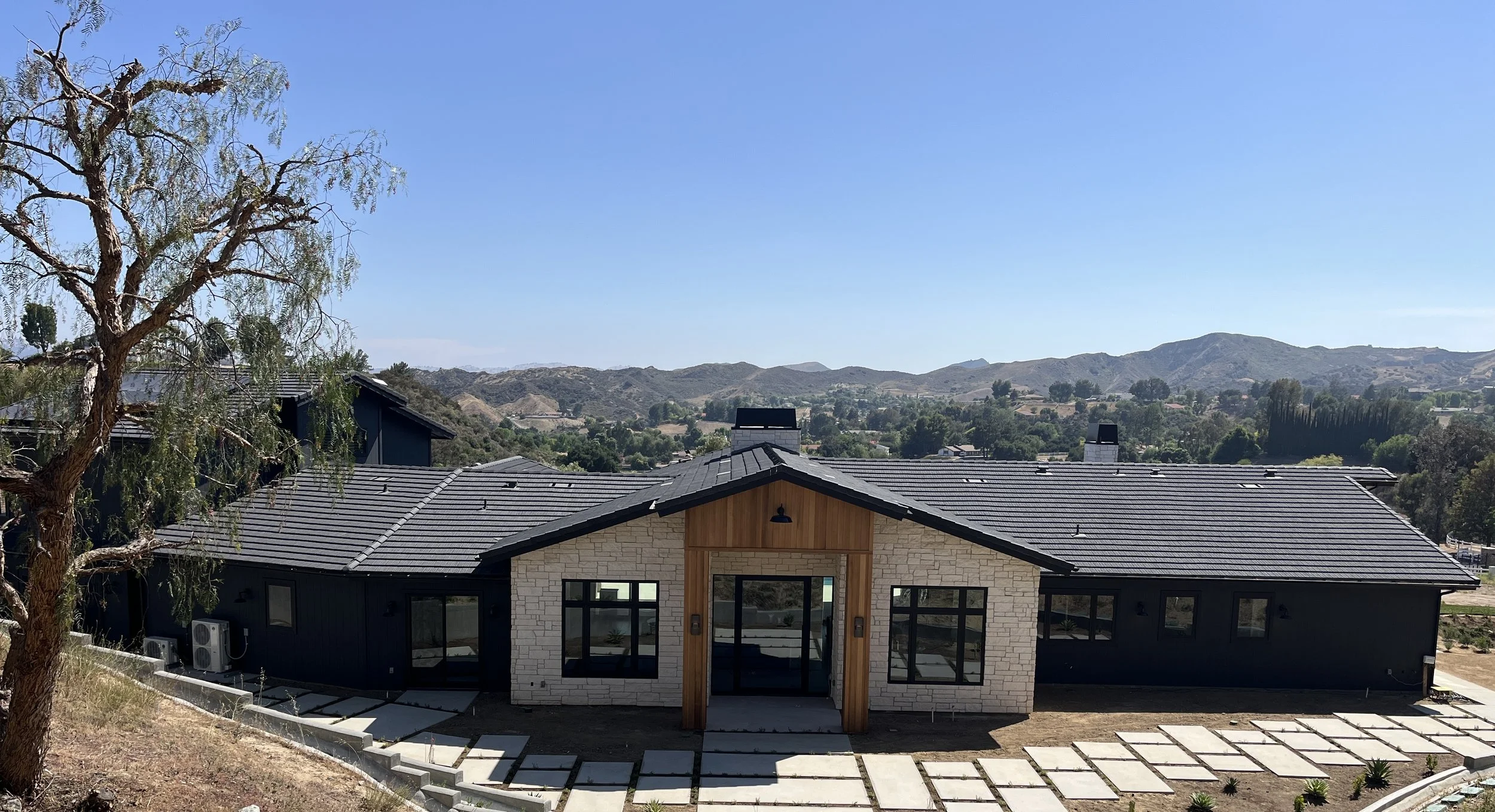
ECC & HERS Rater Services for Homeowners
Homeowners
If your home improvement project required a permit, there's a good chance it also requires ECC or HERS verification before your permit can close. Most homeowners aren't aware of this until they're at the end of their project and call for final inspection. California Energy Code Compliance works with homeowners to identify what's required early — before it becomes a problem.
Not sure if your project requires ECC or HERS verification?
Start with your CF1R. If you have one — or want to understand what one means for your project — use our interactive CF1R Guide below. Just click on the requirement and you will find a short summary of the requirements
Interactive HERS Rater Reference
Click any bullet item to expand explanation, code section, and verification details.
| 01 | 02 | 03 | 04 | 05 | 06 |
|---|---|---|---|---|---|
| Control | Capacity (kWh) | Charging Efficiency | Rate (kW)Rate (kW) | Discharging Efficiency | Rate (kW)Rate (kW) |
| Basic | 10 | 0.95 | n/a | 0.95 | n/a |
Building-level Verifications:
• Maximum fan efficacy: ≤ 0.35 W/CFM
• Maximum sound rating: ≤ 1.0 sone
• Rated for continuous 24-hour operation
• Manual switch required — labeled as whole-house ventilation fan
• Must be ducted to outdoors Code section§150.0(o) RA3.7.3 RA3.7.4 Verified byHERS Rater measures exhaust CFM — must meet or exceed CF1R required ventilation rate. CF2R-IAQ-xx-H.
• Fan efficacy: ≤ 0.6 W/CFM
• SRE and ASRE must meet or exceed CF1R minimums
• Rated for continuous 24-hour operation
• Fault Indicator Display (FID) required if specified on CF1R Code section§150.0(o)1 RA3.7.3 RA3.7.4.4 Verified byHERS Rater measures supply and exhaust CFM, confirms balance %, verifies SRE/ASRE and fan efficacy. CF2R-IAQ-xx-H.
• HVI: hvi.org/hvi-certified-products-directory/
• AHAM: aham.org CFM requiredMinimum airflow per Table 150.0-G by CFA and fuel type. HVI/AHAM rated CFM only.
| CFA (sq ft) | Electric Range Min CFM | Gas Range Min CFM |
|---|---|---|
| < 750 | 160 | 280 |
| 750 – 1,000 | 130 | 280 |
| > 1,000 – 1,500 | 110 | 250 |
| > 1,500 | 110 | 180 |
• Hood not in HVI or AHAM directory
• HVI/AHAM rated CFM below required minimum
• Sone rating exceeds 3.0 at working speed
• Lowest fan speed below 100 CFM Code section§150.0(o)1G Table 150.0-G RA3.7.4.3 Verified byHERS Rater photographs model number, looks up HVI or AHAM directory, confirms rated CFM and sone rating. CF2R-IAQ-xx-H.
Cooling System Verifications:
| Project Type | System Type | Min Airflow |
|---|---|---|
| New Construction | Standard ducted | 350 CFM/ton |
| New Construction | Small duct high-velocity | 250 CFM/ton |
| Alteration | Standard ducted | 300 CFM/ton |
| Alteration | Small duct high-velocity | 250 CFM/ton |
• Previously sealed duct systems registered with a HERS provider
• Systems unable to meet 300 CFM/ton — alternative procedure RA3.3.3.1.5 with thermostat per §110.12
• Asbestos duct systems Code section§150.0(m)13 §150.2(b)1F RA3.3 Verified byHERS Rater measures system airflow. CF2R-MCH-23-H.
The HERS Rater must be physically present. Calling after the install is one of the most common compliance failures. Remote or after-the-fact verification is not permitted.
• Factory charge (lbs and oz) — from equipment nameplate
• Factory line set length (ft) — length the factory charge is designed for
• Actual installed line set length (ft) — must be measured, not estimated
• Liquid line diameter — from equipment specs or nameplate
• Charge correction rate (oz/ft) — from manufacturer's installation manual
Heating System Verifications:
If the outdoor condenser and indoor air handler are not a tested and certified combination, they will not appear in the AHRI directory and cannot be verified. This is a compliance failure that will result in the replacement of the system with a compliant system.
2. Confirm AHRI certified capacity at 47°F ≥ CF1R required
3. Confirm AHRI certified capacity at 17°F ≥ CF1R required
4. If not listed → system must be replaced Common failureContractor installs Brand A outdoor unit with Brand B indoor air handler. Even if both are high quality, the combination is not tested together, will not appear in AHRI, and must be replaced with a compliant matched system. Code sectionRA3.4.3.2 §150.1(c)14 Verified byHERS Rater confirms AHRI certified capacity for the matched system at 47°F and 17°F vs CF1R required BTU/hr. CF2R-MCH-23-H.
HVAC Distribution System Verifications:
Domestic Hot Water System Verifications:
HVAC Change-out
Replacing your heating or air conditioning system triggers a Title 24 ECC or HERS verification requirement. Most homeowners aren't aware of this until they're at the end of their project and call for final inspection.
When your licensed HVAC contractor replaces your system, a certified ECC or HERS Rater must verify the installation before your permit can close. This includes duct leakage testing, airflow verification, and equipment compliance documentation.
Always verify your contractor holds a current California license before work begins. Check their status at the California State License Board (CSLB).
California Energy Code Compliance coordinates directly with your HVAC contractor to complete all required field verifications and compliance documentation — so your project closes on time.
Accessory Dwelling Units (ADU)
Thinking about adding an ADU to your property? Whether you're planning a garage conversion, an attached addition, or a free-standing unit, Title 24 energy compliance is required — and the design decisions you make early in the process have a direct impact on what that compliance costs.
If you are an owner builder or planning to manage your own ADU project, schedule a free 30-minute consultation. California Energy Code Compliance can help with energy modeling and design guidance that can reduce headaches and potentially save you thousands. We have built strong partnerships with energy consulting firms to make sure your project starts on the right foot.
Always verify your contractor holds a current California license before work begins. Check their status at the California State License Board (CSLB).
Learn More →
Remodel

A remodel that requires a permit may also require ECC or HERS verification — even if you're not replacing your HVAC system. Projects that touch insulation, kitchen range hoods, lighting, or mechanical systems can all trigger Title 24 compliance requirements.
If your remodel includes an HVAC change-out or new mini-split installation, a certified ECC or HERS Rater must verify the work before your permit can close. Mini-split installations require an in-person refrigerant weigh-in — something that catches a lot of homeowners and contractors off guard.
Thinking about a DIY mini-split? Systems like Mr. Cool use pre-charged refrigerant lines, but handling refrigerant still requires EPA 608 certification and proper tools. If you pull a permit — and you should — ECC or HERS verification is still required.
Always verify your contractor holds a current California license before work begins. Check their status at the California State License Board (CSLB). (add CSLB logo here)
Not sure if your remodel requires ECC or HERS verification? Call us before work starts — not after.
Owner/Builder
Taking on your own construction project as an owner/builder? California law allows homeowners to act as their own general contractor, but it doesn't exempt you from Title 24 energy compliance requirements. If your project requires a permit, it most likely requires ECC or HERS verification.
Owner/builders often wear many hats — designer, project manager, and contractor all at once. Energy code compliance is one of the most commonly overlooked pieces of a self-managed project. Getting it wrong can delay your final inspection and cost more to fix than it would have to address upfront.
Schedule a free 30-minute consultation before your plans are finalized. California Energy Code Compliance can review your project scope, identify what verifications will be required, and connect you with energy consulting and design partners to keep your project on track.
Not sure where to start? Call us first.
ECC & HERS Rater Services for Contractors
California Energy Code Compliance works with general contractors, HVAC installers, plumbers, and insulation contractors throughout California. We parse your CF1R and create a simple workflow identifying which subcontractors are responsible for what — and when — so nothing gets missed and your project closes without unnecessary delays.
General Contractor
As the GC, you're responsible for making sure every trade on your project meets their Title 24 obligations. That's easier said than done when most subs don't know what a CF1R is.
California Energy Code Compliance reviews your CF1R and flags potential issues before they become problems — ducts in conditioned space, mismatched HVAC equipment that can't be verified on AHRI, kitchen hoods that require HVI or AHAM verification, mini-splits that require witness testing, and more. Catching these early saves time, money, and headaches at final inspection.
HVAC
HVAC contractors are at the center of most Title 24 field verifications. Installed equipment must match what is specified on the CF1R and be verifiable on AHRI. Mini-split installations require in-person witness testing by a certified ECC or HERS Rater.
If you don't already have an ECC or HERS Rater lined up, call us before the equipment goes in — not after.
Plumbing
Plumbers play a bigger role in Title 24 compliance than most realize. The GC needs to schedule an "all pipes insulated" inspection, and the plumber needs to install the correct water heater as specified on the CF1R.
If a specific heat pump water heater (HPWH) is called out on the CF1R, that unit was specifically modeled for that project. Substituting a different unit — or installing a tankless gas water heater instead — triggers a revision that adds unnecessary time and cost. In some cases the wrong unit has to be removed and replaced entirely.
Insulation
QII — Quality Insulation Installation — requires three separate ECC or HERS field inspections:
Air seal inspection — completed before insulation is installed
Insulation inspection — completed before drywall goes up
Final inspection — top plates, penetrations through drywall for lights, vents, and other openings
All three inspections must be scheduled and completed in sequence. Missing one means going backwards. Call us early so we can coordinate around your schedule.
Contact Us
Have questions? Fill out some info and we will be in touch shortly,or call/text/email 805.813.1204. We can’t wait to hear from you!